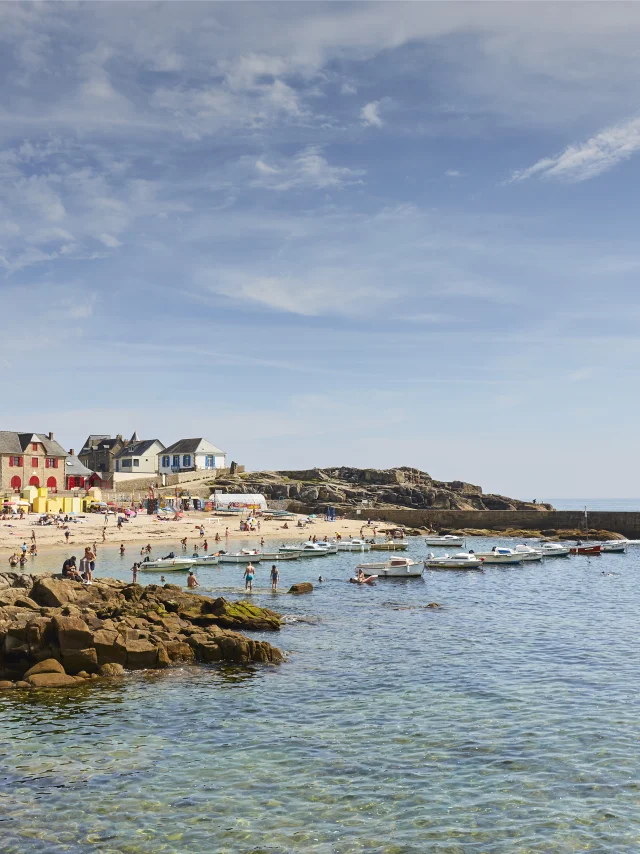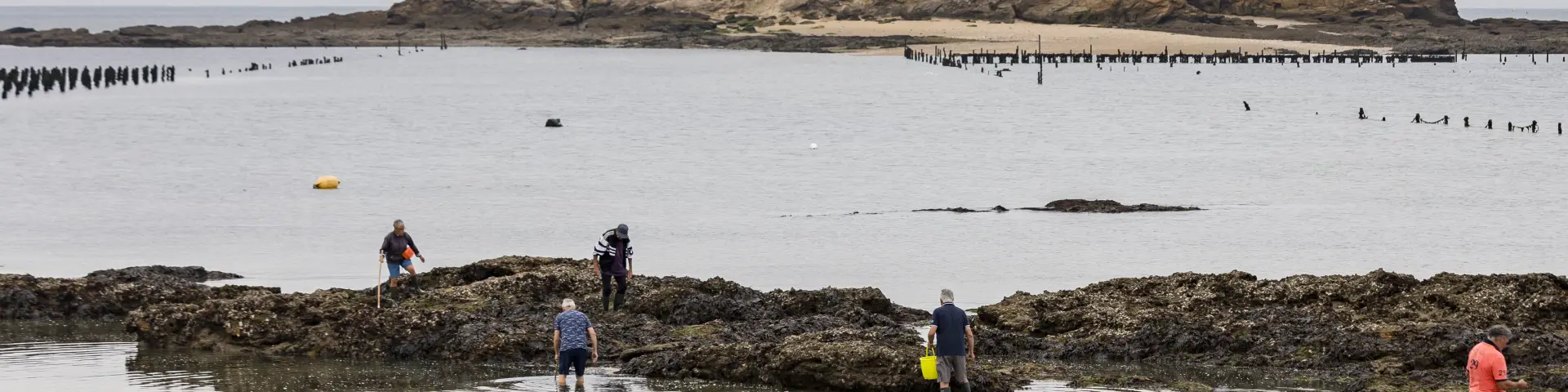
Photo of fishermen at PénestinFishing on foot - Pénestin - Pointe du Bile
©Fishing on foot - Pénestin - Pointe du Bile|EMERIC JEZEQUEL

Fishing on foot

Ajouter aux favoris

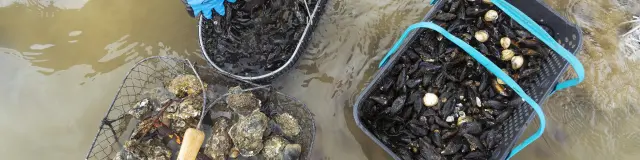
Fishing on foot on the Atlantic coast: a family activity that combines relaxation and the discovery of shellfish, in complete safety.

Our selection of spots fishing on foot

The coastline of our La Baule-Presqu’île de Guérande region offers a wide range of shellfishing sites. Here are some of the shellfish you can pick up depending on where you go:

  • In La Turballe, the spot for cockles and clams is Pen-Bron! As a bonus, you’ll enjoy a magnificent view. If you prefer mussels or periwinkles, head for Ker-Elisabeth!
  • Oysters, mussels and periwinkles are caughtin Piriac, Pointe du Castelli and Port au Loup. Use a landing net to fish for grey shrimp in the holes in the rocks.
  • From Plage Benoîtin La Baule to Plage du Nauin Le Pouliguen, you can’t miss the clams and cockles.
    In Pénestin, from the Pointe du Bile to the Plage du Loguy, you’ll love the étrilles, oysters, mussels, cockles, razor clams, prawns and sea urchins…
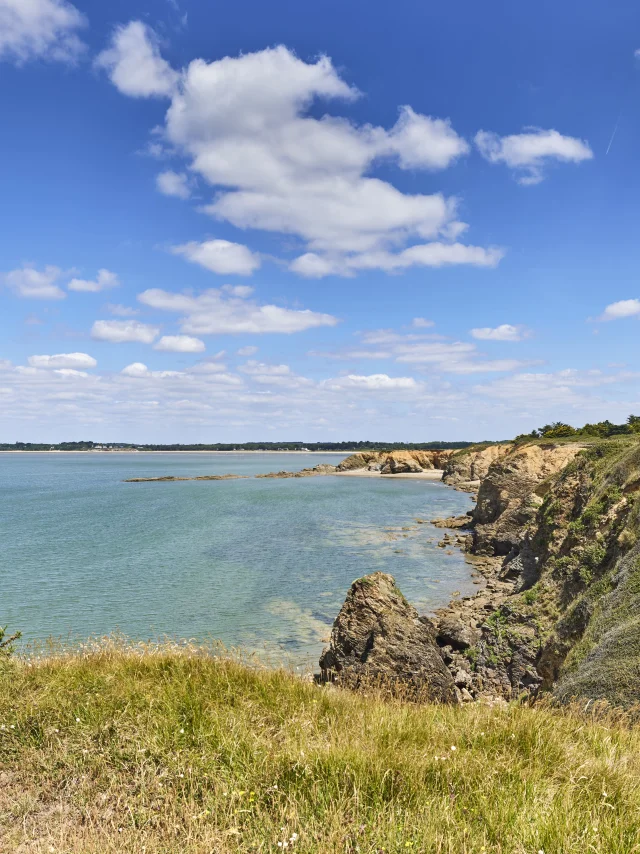
  • On the wild coast, from Le Pouliguen to Batz-sur-Mer and Le Croisic, shrimps, periwinkles, mussels and oysters hide in the rocks.

Remember to always keep an eye on the rising tide, and on the people with you!
Fishing on foot : beware of bans!

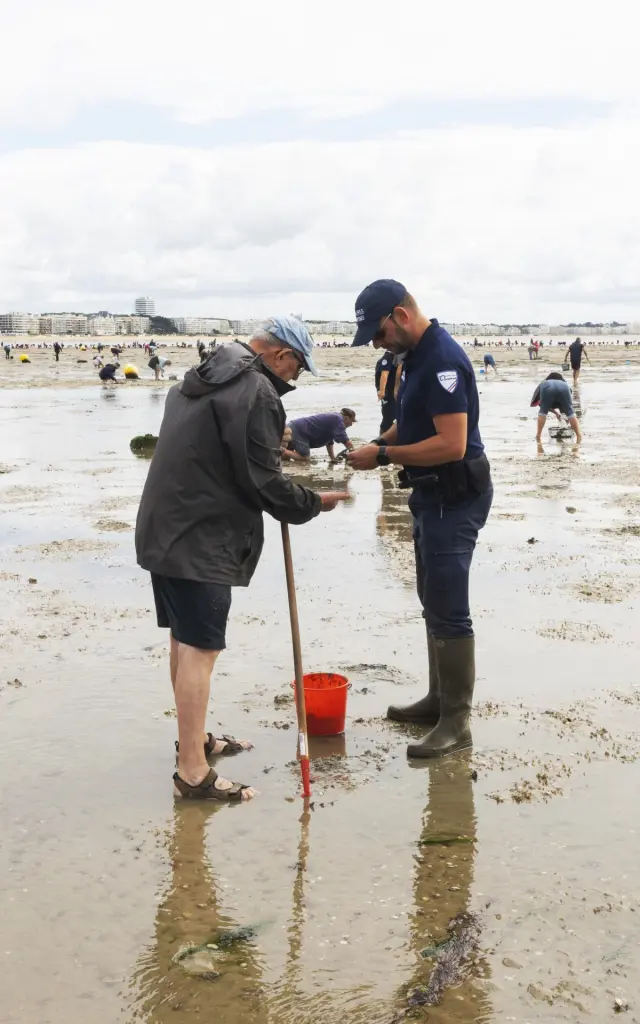
Before you go out fishing, find out about the quality of sites that may be temporarily closed due to deterioration in quality or protection of the resource.

Four classes have been defined according to quality levels for recreational fishing:

  1. Fishing authorised: Good quality
  2. Fishing tolerated: Average quality with cooking of shellfish recommended
  3. Fishing not recommended: Poor quality with sustained cooking of shellfish recommended
  4. Fishing prohibited: Poor sanitary quality

Below are the current bans on fishing on foot in our 2 départements:

The 10 reflexes to adopt

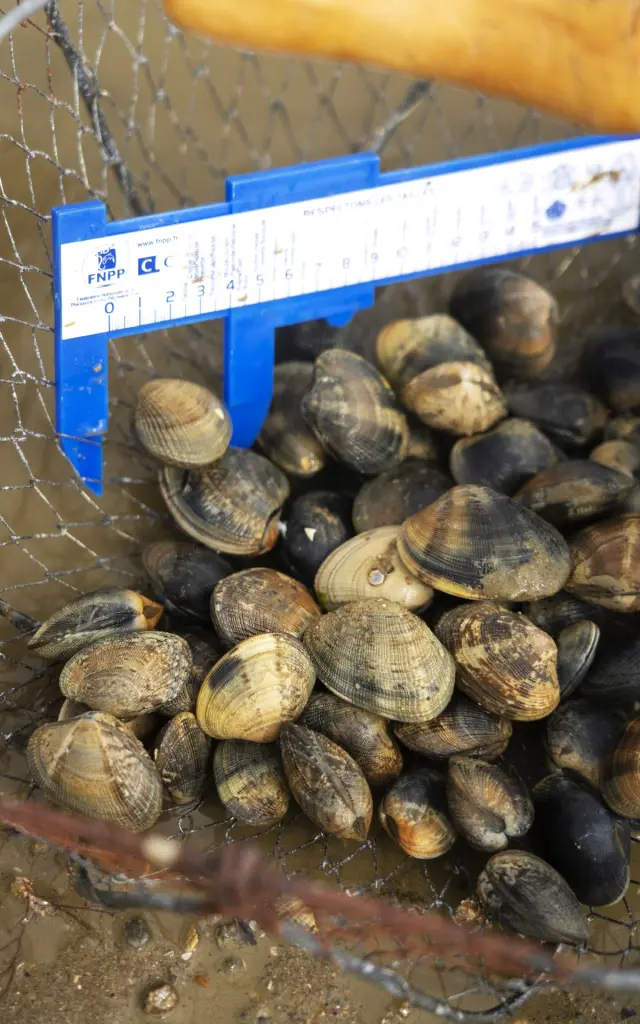
  1. Respect the minimum size of shellfish and the maximum quantities.
  2. Strictly replace pebbles and do not remove seaweed.
  3. To scrape sand, use your hands, a knife or a scraper (3 teeth max).
  4. Choose sites away from rainwater discharges, harbours and mooring areas.
  5. Do not fish in professional parks (areas with yellow signs)
  6. Respect the ban on collecting and eating fish
  7. Fish live specimens: eliminate shellfish that are chipped, open or have a bad smell
  8. During fishing, wash and refresh shellfish with seawater
  9. Allow shellfish to drain before eating them
  10. Keep them alive in the fridge and preferably eat them the same day.

Please note: the consumption of shellfish harvested on foot is not recommended for certain vulnerable people (pregnant women, young children, etc.).